What Is an A-B-A Extruder and How Does It Transform Production Economics?
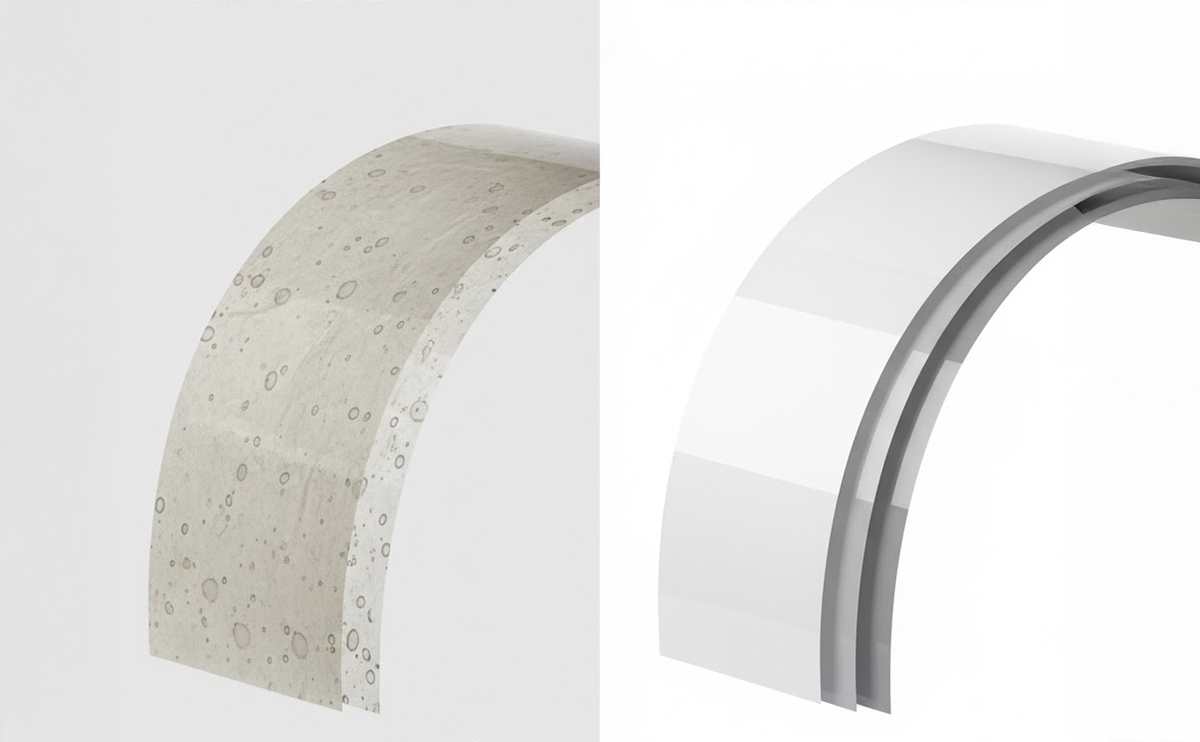
A-B-A is a three-layer film extrusion system that uses only two extruders. One extruder (A) feeds the two outer layers, while the second extruder (B) feeds the thick inner core layer.
This creates a “sandwich” structure that solves all the limitations of monolayer extrusion:
- Layer A (Outer layers): Uses pure virgin HDPE + white masterbatch (TiO₂). These thin layers (10–15% each) define the appearance: gloss, perfect whiteness, strength and excellent printability.
- Layer B (Inner layer): This is the “engine” of your cost savings. It represents 70–80% of total film thickness. Here you can load the cheapest raw materials: mineral filler (CaCO₃) (up to 50–70%) or dirty, mixed-color recycled rPE.
Result: The Best of Both Worlds
From the outside, your bag looks like a premium 100% virgin product: white, glossy, strong and ideal for printing.
Inside, the production cost is significantly reduced due to low-cost filler or recycled material. Additionally, the three-layer structure naturally improves tear and puncture resistance compared to a monolayer film of the same thickness.
Your B2B Strategy: A Complete Turnkey Cycle
Investing in an A-B-A extruder is one of the fastest payback strategies for film production in Georgia. It allows you to use the cheapest materials (filler, recycled feedstock) without compromising quality.
At Caucasus Polymer Group, we offer a complete technological cycle:
- Equipment (A-B-A extruder and bag-making machine).
- Formulation (virgin HDPE for the A layers).
- Fillers (CaCO₃ for the B layer).
- Additives (Desiccant and Anti-odor for recycled materials, if needed).
- Masterbatches (white for layer A, black for layer B).
We don’t just sell the machine — we launch it at your factory and optimize the formulation so you can immediately produce a competitive and profitable product.
Ready to calculate the payback of an A-B-A line for your production? Contact us for a technical consultation.